Best Of
Does Oracle have plans to add error messages on IGT Order XML generation failures to Users?
User receives notification that IGT Order XML generation failure but does not have the reason, the logs have the error reason, but users dont have access to the logs. Oracle should put the error reason in the notification and not make people dig through log files and debug in production. Response XML just has internal error condition occured.
 AppsUser
Re: Product certification search in MOS
Checked with the Database folks specifically and yes, you should look at the base release. They also have work underway to ensure all values are updated and correct in the new support portal.
For O/S, the focus is on the base release and then they add notes if a certain OS is certified with it, ie: OL10/ RedHat 10 is certified with RU 19.22 and above
Regards,
Margi

Re: patch download corrupt
Hello Team,
Please, acknowledge that the Patch 38527687 - WLS STACK PATCH BUNDLE 14.1.2.0.251010 is for WebLogic Server 14.1.2 , not 14.1.1.
When going to the KM article KA1182" rel="nofollow noopener ugc">KA1182 Critical Patch Update (CPU) Patch Advisor for Oracle Fusion Middleware - Updated for October 2025 (2806740.2)
in the "FMW Infrastructure / WebLogic Server" tab, choose "FMW Infrastructure / WebLogic Server" in the drop-down menu.
Then, in this page, you have to click on the "14.1.1" sub-tab :
Oracle WebLogic Server
14.1.2.0|14.1.1.0|12.2.1.4
It should then confirm that you are looking at the "Critical Patch Update for Oracle WebLogic Server 14.1.1.0" page.
See, it gives you the link to : Patch 38452298 WLS STACK PATCH BUNDLE 14.1.1.0.250919
This information will help you too.
Best regards,
Stephan
Issues in View
Hello,
Development team is getting an issues while opening a view in OMW.
The error is "Error:N not found in user defined code 98 EG in jde"
AR-9.2; TR-9.2.4.1 ; DB2
Regards
Raj
Re: Product certification search in MOS
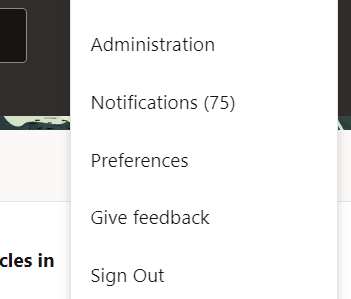
Also, all, please go to the support portal and under the 'Account' button in the top right of the screen there is a drop down menu with 'Give feedback'. Please leave feedback there so the teams see it.

Re: Product certification search in MOS
The 'Old' MOS actually shows the same thing as the current MOS for this version, so nothing has changed in this particular case. I am checking with a different admin team though to see if all the certifications have been updated appropriately. In this case, like I said, it matches though….
Regards,
Margi
Re: Product certification search in MOS
Hi,
It seems that for "Oracle Database", you need to select the base release (19.0.0.0.0) in order to see the certified Operating System.
For some reason, we see a couple of other releases (like 19.22.0.0.0) that can be selected but really don't know what are they related to…
I'm also very confused with this new Certification Matrix, which really needs some improvments / clarifications.
Regards,
Pascal
Who Creates Item Catalog Entries in Your Organization and How?
Who/How are Item Catalog Entries maintained at your organization?
For example, by default, Requestors could try to order black pens from any supplier.
You have decided that you want to get black pens only from supplier X.
Does a Buyer in the purchasing department create the item catalog entry? Do you have team of buyers assigned to do this work? Someone else?
Re: Effdt Logic in Query Manager not working on outer joins for ex_types_tbl and ex_purpose_tbl tables?
Hi @Wade Bouley - State of Montana
Thank you for your question,
We recommend checking first with the PeopleTools support team (on Community or via SR), as there are similar but not the exact issues reported.
If they conclude this is an application-specific issue, please create an SR with the Expense Support team and provide a clear example that is replicable in DEMO.
From what PUM Image # did you upgrade from?
From one of the PeopleTools issues I encountered, they recommend the following workaround that may also work for you:
- Create a view with the correct effective dated criteria
- Create a query based on the new query created
- Retest the issue
Kind regards,
George