Best Of
Re: Advisor Webcast: PeopleSoft HCM Benefits SECURE 2.0 Act - Section 603 - Oracle Advisor Webcast
Unable to register for Secure 2.0 12/17 webcast, goes back to Sign-in page, For 25-D webcast recording and PDF, it's redirecting to an internal Oracle website where customers don't have access
 Ramacha
Re: How Will We Be Notified When ACA Updates are Released?
Good morning! There was an update on the main ACA doc indicating that they were still waiting on something from the IRS; I believe some sort of ID.
MaraLCRA
Re: Where have my bookmarks in Knowledge gone??
This isn't growing pains. It is an epic fail.
My Oracle Support, are you really happy with what you've delivered ?
Hello Oracle support team,
Hello Oracle Support Team,
Seriously, are you really satisfied with what you've provided for Oracle Knowledge??? It's a complete disaster. I don't understand how anyone could have approved this.
Honestly, I was really happy to have a support page like before, but now, how can I put it, it's really, really bad. I can't find anything anymore, the various links almost never work, in short, your copy really needs to be revised.

Re: Where have my bookmarks in Knowledge gone??
@Margi-Oracle - Putting your "I hear your frustration….." against every post complaining about the new portal is not answering the key questions here.
A properly designed system you shouldn't have to draw up a 'known issues' document. The fact that you have removed important functionality and features from this portal is the main frustration from your customers.
Re: Tax update 25D missing cobol copybooks
Hi,
Could you please check and copy these PSCGRSWK.cbl, PSCTAXWK.cbl, PSCTARRY.cbl, PSCTGBTB.cbl, PSCXARRY.cbl, COBOL copybooks from the PI_HOME of PUM Image 53 and recompile all of them and test?
EPY: COBOL Compile Error When Applying Tax Updates, Bundles and Updates & Fixes. (Doc ID 645273.1)
Thanks
Re: Xstore 23v : Generation of Xstore update build & Xadmin deployment
Thank you! I will look into it.
Re: How to Copy outline from one database to another in Essbase Jet/21c
Hello User_KBB64,
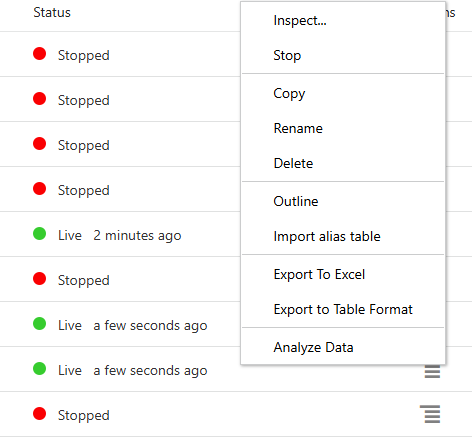
You can export and import outlines using JetUI by selecting the db -> actions -> export to Excel then import it back to desired application. CLI also has export/import capabilities:
All the Best,
David